

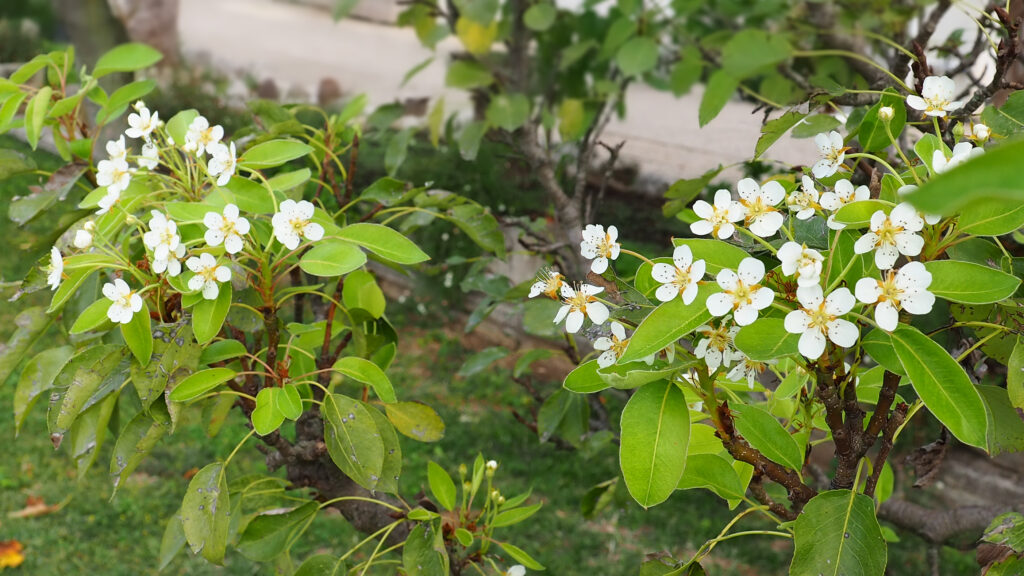
Normalmente l’albero di pero (Pyrus communis) fiorisce in primavera e allora perché nel mio giardino una pianta di pero è fiorita in ottobre?
Si tratta di un evento anomalo dovuto ad un cambiamento del clima. La pianta collega le temperature miti di ottobre e l’umidità del terreno e dell’aria all’arrivo della primavera. La pianta, attraverso i suoi recettori “annusa” l’ambiente circostante e stabilisce che è arrivato il momento della fioritura.
I fiori attuali tra non molto, all’arrivo del freddo, andranno persi e non porteranno frutto l’anno successivo.
La pianta è un essere vivente
La pianta è un essere vivente e come tale percepisce e reagisce a ciò che la circonda. Molte volte, come per gli esseri umani, può essere tratta in inganno da condizionamenti esterni.
Aver Fiducia
Quale altro messaggio ci trasmette questa pianta di pero in fiore nel mese di ottobre?
Una fiducia mal riposta non porta frutto ma tutto non è perduto. La pianta perderà sì tutto o in parte i frutti della stagione prossima ma continua la sua vita, la sua strada, e darà frutto certamente negli anni futuri. Se scopriamo che la fiducia che abbiamo riposto in qualcuno è stata tradita guardiamo al nostro futuro con fiducia… i nostri fiori daranno sicuramente frutto nelle prossime stagioni.
Dice Bear Heart (Cuore d’Orso), un Nativo Americano sciamano, nel suo libro[1] Il vento è mia madre – Vita e insegnamenti di uno sciamano pellerossa (Edizioni Il Punto d’Incontro, 1998): “Avere fiducia costa molto. Ma quando siamo profondamente fiduciosi, anche se la gente in cui crediamo ci delude questo non ci tocca, perché è un loro problema. “…”. Se restiamo attaccati al concetto di tradimento e di dolore non cresceremo mai”.
L’ambiente che ci circonda, con i suoi stimoli, ha la sua importanza
E se i condizionamenti negativi rimangono nel tempo?
La nostra pianta di pero, in fiore nel mese di ottobre, per forza di cose non vedrà i frutti dei suoi fiori. I fiori possono essere il simbolo dei nostri talenti, del nostro impegno e dell’energia che mettiamo nel fare le cose, così come la pianta, allo stesso modo, indirizza la sua energia nel fiore.
Quale consiglio possiamo trarne?
Diversamente dalla pianta, che non può muoversi, noi esseri umani abbiamo, il più delle volte, la possibilità di cambiare luogo, ambiente, conoscere e instaurare relazioni con nuove persone, darci nuove opportunità di crescita.
Bibliografia
[1] Libro/Book
“Il vento è mia madre – Vita e insegnamenti di uno sciamano pellerossa” di Bear Heart con la collaborazione di Molly Larkin, Edizioni Il Punto d’Incontro, Prima edizione italiana pubblicata nel 1998. Titolo originale del libro “The wind is my mother – The life and teachings of a Native American shaman”. Prima edizione americana pubblicata nel 1996 da Clarkson N. Potter, Inc./Publishers, New York.
A pear tree in bloom in October
Normally, the pear tree (Pyrus communis) flowers in spring, so why did it flower in October in my garden?
This is an unusual occurrence caused by climate change. The plant associates the mild October temperatures and the moisture in the soil and air with the arrival of spring. Through its receptors, the plant ‘senses’ its surroundings and determines that the time to flower has come. These flowers will soon wither away when the cold weather sets in and will not bear fruit the following year.
The plant is a living being
The plant is a living being and, as such, perceives and reacts to its surroundings. Often, just like humans, it can be misled by external influences.
Having trust
What other message does this pear tree in bloom in October convey to us?
Misplaced trust bears no fruit, but all is not lost. The plant may well lose all or part of next season’s fruit, but it continues its life,its journey, and will certainly bear fruit in future years. If we discover that the trust we have placed in someone has been betrayed, let us look to the future with confidence… our blossoms will surely bear fruit in the seasons to come.
Bear Heart, a Native American Shaman, says in his book[1] The Wind Is My Mother: The Life and Teachings of a Native American Shaman (Edizioni Il Punto d’Incontro, 1998): “Having trust comes at a high price. But when we are deeply trusting, even if the people we believe in let us down, it doesn’t affect us, because it is their problem. “…”. If we remain clinging to the concepts of betrayal and pain, we will never grow”. Traduzione del testo della frase riportata, dall’Italiano all’Inglese, a cura di Maurizio Romio autore del post pubblicato.
The environment surrounding us, with its various stimuli, plays a significant role
But what happens if the negative influences of that environment persist over time?
Consider a pear tree blooming in October: inevitably, it will never see the fruit that those blossoms could have produced. Flowers can symbolize our talents, our dedication, and the energy we pour into our endeavors—much like the tree channeling its own energy into its blossoms.
What lesson can we draw from this?
Unlike the tree, which is rooted in one place, we human beings almost always have the ability to change our location and environment, meet and build relationships with new people, and create fresh opportunities for growth.
Bibliography
[1] The Wind Is My Mother: The Life and Teachings of a Native American Shaman by Bear Heart with Molly Larkin (Edizioni Il Punto d’Incontro, 1998). Original title: The Wind Is My Mother: The Life and Teachings of a Native American Shaman. First American edition published in 1996 by Clarkson N. Potter, Inc./Publishers, New York.
Bibliografia, Fonti/ Bibliography, Sources
Libro/Book
“Il vento è mia madre – Vita e insegnamenti di uno sciamano pellerossa” di Bear Heart con la collaborazione di Molly Larkin, Edizioni Il Punto d’Incontro, 1998. Titolo originale del libro “The wind is my mother – The life and teachings of a Native American shaman”. Prima edizione americana pubblicata nel 1996 da Clarkson N. Potter, Inc./Publishers, New York.
The Wind Is My Mother: The Life and Teachings of a Native American Shaman by Bear Heart with Molly Larkin (Edizioni Il Punto d’Incontro). Original title: The Wind Is My Mother: The Life and Teachings of a Native American Shaman. First American edition published in 1996 by Clarkson N. Potter, Inc./Publishers, New York
***
Vedi anche/See also:
